Most people who show up to work assume the company benefits automatically. They believe their presence equals contribution, that hours equal impact, and that compliance equals advancement.
That’s the old myth.
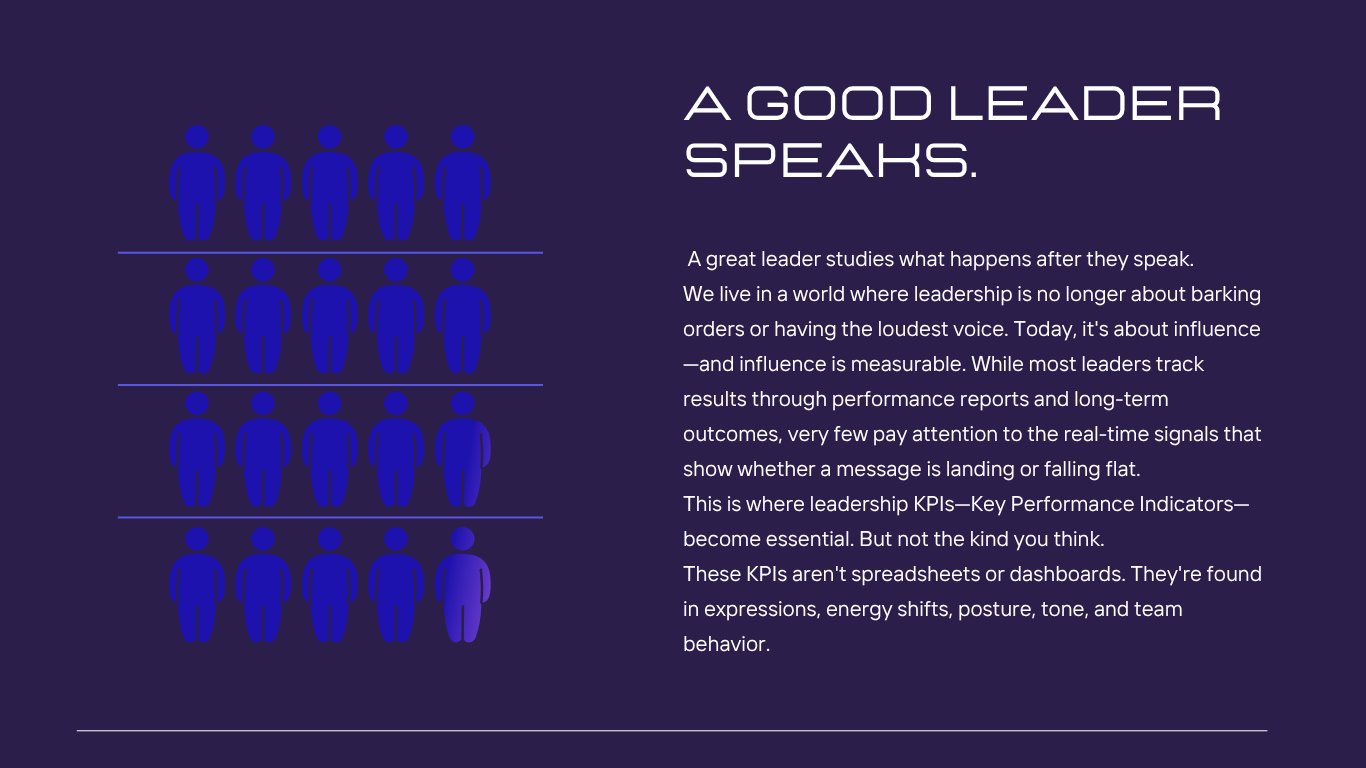
The modern workplace is clearer than ever: only about 20% of employees typically create over 80% of the company’s value. The rest perform tasks that are necessary—but not transformative. And companies often operate comfortably this way. They’re not broken. They just aren’t built to make everyone powerful.
If you are not in that 20%, your job might not be benefitting you.
Even worse—it might be quietly draining you.
Not because you’re incapable, but because you aren’t positioned to gain power.
This isn’t about hustle culture. It’s about being strategic.
It’s about measuring whether your work multiplies your life instead of shrinking it.
The Question That Changes Everything
“Is my job benefitting ME — or only using me?”
To answer that, you need four truths:
| TRUTH | WHY IT MATTERS |
|---|---|
| 1. Power has to be intentionally collected. | Waiting to be rewarded is a poverty mindset in the workplace. |
| 2. You must measure your own results before your employer does. | Data protects you and validates your growth. |
| 3. You need authority to negotiate compensation. | Impact with no leverage = a compliment, not a paycheck. |
| 4. If a job cannot grow you, it is shrinking you. | Even stability has an expiration date. |
This is not about quitting.
This is about waking up before someone else decides your worth again.
What “Benefitting You” Actually Means
Most employee handbooks teach benefits like:
Paycheck
Health insurance
Time off
“Experience for your résumé”
Those aren’t benefits.
Those are transactions.
A real benefit is:
Skill gain that translates into power
Access to decision making
Increasing control over your schedule
Ownership or influence over revenue
Authority that can travel outside the company
If your job isn’t giving you any of these, but it’s taking your time, peace, or health—then the benefit flow is one-directional.
The Five Power KPIs
Your new measurement system. Your new standard.
These KPIs aren’t about how well you serve the job.
They are about how well the job serves your trajectory.
KPI #1 — Autonomy Growth Rate
Do you have more control over your work this quarter than last quarter?
If not, you are being managed.
If yes, you are becoming a leader.
Target metric:
10% growth in decision-making authority every quarter.
This can look like:
Being trusted with client decisions.
Being the point of contact instead of the messenger.
Owning a process end-to-end.
If you still need permission for every move after six months, you are in a role designed to limit your scale.
KPI #2 — Skill-to-Income Conversion
Are the skills you’re building something you can sell outside of this job?
If every tool you use is proprietary, internal, or untransferable, your skill set is being caged.
Example of a transferable skill:
Writing proposals that close deals
Example of a caged skill:
Using a company-specific software no one else recognizes
Measure it like this:
“If I walked away tomorrow, what would I still own mentally, technically, and professionally?”
If the answer is nothing but trauma and tasks, leave the house of borrowed power.
KPI #3 — Reputation Equity
Your name should mean something in the building.
If people at work don’t associate you with something valuable, you are invisible equity.
To measure:
How often people ask for your input
If leadership knows your name
Whether your absence slows workflows
If teammates speak your name when you aren’t in the room
Reputation is a currency companies cannot tax.
It gives you negotiating power without confrontation.
KPI #4 — Leverage Points Created
Leverage is any point where your existence makes the company money or saves the company money.
Examples:
You create a new onboarding process that shortens training time by 50%
You improve a customer experience that reduces refunds
You design a dashboard that increases speed of reporting
This is value creation, not task completion.
This KPI is the difference between:
“We could replace you”
vs.
“We can’t move without you”
KPI #5 — Compensation Alignment
If you grow the company 5%, your compensation should grow 5% — or more.
If a company grows because of you, and your compensation remains stagnant, you’re in a loyalty trap.
A fair company wants you richer.
Not just busier.
Because people who earn are people who stay.
Turnover costs more than salary.
When employees are underpaid, three things always happen:
✔️ Leadership burnout
✔️ High performers quit
✔️ Bullying and harassment rise because frustration becomes culture
When only 20% of the workforce carries the company, resentment becomes policy.
The Psychological Damage of Being Under-Utilized
This is a form of violence we don’t talk about enough.
When a job refuses to grow people, it:
Damages self-worth
Makes leadership feel like punishment
Creates learned helplessness
Normalizes being overlooked
Trains employees to expect less
Being underutilized is not “easy work.”
It is identity starvation.
Someone working beneath their capability is not coasting — they are deteriorating.
If your job is not developing you, it is quietly unbuilding you.
The Silent Epidemic: Harassment of the High Performers
Most harassment training focuses on sexual harassment and discrimination.
But there is another form:
Productivity Harassment
When high performers are punished for outperforming their title, coworkers feel threatened, and managers feel exposed.
Behaviors include:
Withholding information
Hiding advancement opportunities
Micro-managing talented people
Redirecting credit
Weaponizing your ambition
This happens because systems protect the status quo.
Growth exposes weaknesses.
Power shifts threaten people who earned their title but not their skillset.
Leadership Failure: When Companies Choose Stagnation
Most companies don’t have a talent problem.
They have a courage problem.
The pain point you mentioned—companies are fine with only 20% of staff adding value—is a leadership failure in four dimensions:
| Failure | Consequence |
|---|---|
| No growth path | People quit mentally before they quit physically |
| Rewarding loyalty over results | Mediocrity becomes culture |
| Hiring out of urgency, not strategy | The wrong people fill the right seats |
| Leadership without coaching | Authority becomes ego, not mentorship |
This creates a place where:
Innovation feels like rebellion
Asking for a raise feels like disrespect
Ideas die inside people before they reach a meeting
How Much Power Can You Personally Gain?
Power isn’t a promotion.
Power is mobility.
There are 6 forms of workplace power you can accumulate:
Information Power
People come to you because you know what others don’t.Network Power
Your relationships open doors faster than your résumé.Execution Power
You get things done efficiently and visibly.Revenue Power
You can directly or indirectly point to income.Operational Power
Your absence slows or breaks systems.Reputational Power
People talk about what you do when you aren’t there.
You don’t need all six.
You need three.
Three is enough to negotiate.
Three makes you non-disposable.
Three makes your salary a discussion — not a request.
How to Measure Yourself Like a Business
Stop evaluating your job like an employee.
Start evaluating it like an investment portfolio.
Ask yourself quarterly:
What’s my power ROI?
Can I monetarily prove my impact?
Does my boss value growth or obedience?
Can I leave with more than I arrived with?
Who would pay for my skills outside this building?
If your answers don’t improve every three months,
your job might not be a career.
It might be a waiting room.
Even if you stay, stay intentionally.
What Growth Should Feel Like
Not comfortable.
Not chaotic.
Not humiliating.
Growth should feel like:
Someone is handing you keys
You are allowed to risk and recover
Your presence changes outcomes
You are trusted with something that matters
You can see your future from where you stand
If growth feels like:
Fear
Silence
Begging
Proving yourself over and over
…then your growth is being gatekept.
And gatekeeping is not leadership.
It is insecurity with a title.
What to Do When Your Job isn’t Benefitting You
You don’t always need to quit.
But you must upgrade your approach.
Step 1 — Start Tracking Your Value
Document everything you improve.
Turn tasks into metrics.
Turn metrics into proof.
Step 2 — Build a Case File
This is what protects you in negotiations, evaluations, and exit interviews.
Step 3 — Build 1 External Skill Per Quarter
Make sure you are never 100% dependent on an employer.
Step 4 — Ask for Power, Not Permission
Propose solutions. Own systems. Initiate outcomes.
Step 5 — If You Are Rejected, Reverse the Question
Say:
“What conditions need to be met for advancement?
And can we agree on a timeline for that transformation?”
No answer or vague answer = your answer.
It’s time to plan your exit in silence.
Conclusion
You deserve to work in a place where your labor comes with legacy.
Where contribution earns compensation.
Where ambition isn’t an inconvenience.
Your job should not own you.
It should upgrade you.
Because the only thing more expensive than being underpaid is being underestimated.
– Felicia Scott